Off-ice hockey training aids let players build stickhandling, passing, shooting, and conditioning skills between practices when ice time runs short. The best picks pair pro-grade durability with skill-specific design. This guide walks through Give-N-Go Hockey’s flagship aids, plus surfaces, kits, and bundles, organized by skill area and player level so you can build a setup that fits your goals and budget.
Key Takeaways
- Stickhandling drives the biggest off-ice ROI. Daily reps with a pro stickhandling trainer like the Give-N-Go Fast Hands Pro show up directly as faster hands on game day.
- Passing aids solves the “no partner” problem. The Give-N-Go Passer’s solid rubber bumper and steel gripper teeth give you a true 5-foot target for one-timers and quick-touch reps.
- Shooting tutors build accuracy that tarps can’t match. Numbered targets and one-piece HDPE construction (like the Give-N-Go Professional Grade Shooter Tutor) train precision and snap-back recovery.
- Match the aid to the level. Mites and Squirts need lighter, kid-scaled gear; Bantams and up benefit from weighted pucks, anchored passers, and full-size targets.
- Made-in-USA gear lasts. Heavy-gauge steel and Michigan manufacturing mean Give-N-Go aids are built to outlast a youth career and be handed down to siblings.
Ice time is expensive. It’s also limited, weather-dependent, and split with twenty other skaters. The work that actually separates players, like the stickhandle that splits two defenders or the wrister that catches the top corner, almost always happens off the ice.
That’s where the gear comes in. The best off-ice hockey training aids let you put in focused, high-rep work on a garage floor, in a basement, or on a backyard pad. Skill builds quietly, day after day, and shows up on game night.
Give-N-Go Hockey training aids are built in Michigan and used by all 32 NHL and 32 AHL teams. The same products pros warm up with are the ones we recommend below for kids, juniors, and weekend-league adults. The point isn’t to copy a pro’s drill, it’s to use pro-grade tools at your own level.
Here’s what this guide covers, in order:
- Stickhandling trainers
- Passing and receiving aids
- Shooting accuracy targets
- Training surfaces and tiles
- Dryland fitness and skating tools
- Complete kits and bundles
- How to choose by age and budget
For each section, you’ll find product types, what to look for at each skill level, and a few flagship picks. Jump to the skill you’re working on right now, or read straight through if you’re building a setup from scratch.
Stickhandling Training Aids - What’s Worth Buying for Quick Hands
Stickhandling is the skill that benefits most from off-ice repetition. Soft hands aren’t built in a 50-minute team practice. They’re built in 15-minute sessions in front of a TV, every single day.
The good news: you don’t need ice. You don’t need a coach. You need a flat surface, a stick, and one or two of the products below.
Product categories to know:
- Stickhandling balls. The Swedish stickhandling ball (orange or yellow, weighted) mimics puck weight better than a regular ball. Wooden balls work too, but they bounce more.
- Training pucks. The Green Biscuit is the gold standard for off-ice puck handling, even on rough surfaces. It slides like a real puck on dry ground.
- Obstacle courses. Cone setups, dot patterns, and obstacle pads force tight, varied moves instead of mindless cradling.
- Digital stickhandling trainers. Light-up boards and tempo trainers add reaction-time work to your reps.
The Give-N-Go Fast Hands Pro is what we recommend for serious stickhandling work. It’s built for daily abuse, scales from beginner sequences to advanced patterns, and holds up to weighted pucks without cracking. Pair it with the Green Biscuit thrown into every order, and you have a complete handling station.
Skill-Level Picks for Stickhandling
- Beginner (Mites / 8U). Start with a Swedish stickhandling ball and a smooth garage floor. Two 10-minute sessions per day beat one 30-minute grind. Focus on side-to-side, figure-8s, and toe-drag basics.
- Intermediate (Squirts / Peewees). Add an obstacle pattern. Cones, painters' tape squares, or a dedicated trainer give you something to navigate. Mix in a Green Biscuit for puck-feel work.
- Advanced (Bantam+, Junior, adult rec). Weighted pucks, blindfolded reps in a safe space, and tempo work with a digital trainer build hand speed. Add stickhandling under fatigue, right after a conditioning circuit.
Writer note: Pair any handling work with a clean dryland surface. Stickhandling on textured concrete eats blade tape in a week and stops a Green Biscuit cold. A simple shooting pad or a section of dryland tile makes every rep feel closer to ice.
The trap most parents fall into: buying a fancy trainer, then never setting up a routine. Pick a 12-minute warm-up sequence, run it before homework or before a game day, and stick to it. Reps compound.
For drill ideas to use with these aids, our stickhandling drills for kids break down walks through twelve progressions you can build into a weekly schedule.
Passing & Receiving Training Aids - Build Soft Hands Without a Partner
Passing is the most under-trained skill in youth hockey. Why? Because you needed a partner. The current generation of off-ice passing aids has solved that problem.
A good passer rebounds the puck back at game speed, accepts a pass without skipping, and survives the hardest shot you can deliver from a few feet away. The cheap ones lose tension, splinter, or send the puck rolling sideways into a wall.
Passer Categories
- Puck rebounders. Spring or rubber tension boards. Best for solo practice in a small space.
- Bungee-cord passers. Lightweight, portable, but variable feedback depending on cord age and weather.
- Anchored passing aids. Bolted to a hard surface. Most realistic feel, no movement on heavy passes.
- Full-target rebounders. Larger surface area, accept off-target passes, simulate a teammate’s stick blade.
The Give-N-Go Passer comes in 60-inch and 30-inch models. The 60-inch is the largest 5-foot target on the market. Solid rubber bumper technology (patent pending) returns pucks at game pace without losing tension over the season. Steel gripper teeth keep it locked to a wall, fence, or backyard rink board, even when an older player is firing slap-pass after slap-pass.
For players with a permanent dryland setup, the Power Passer is the first anchored dryland passing aid we know of. Installed with Tapcon screws into concrete, plastic hockey tile, or synthetic ice, it gives a reps-without-end feel. No drift, no shifting, no resetting between shots.
Drills to Pair With a Solo Passer
- One-timers (both wings). Forehand reception, quick stride, fire. Twenty per side.
- Forehand-to-backhand cycle. Receive forehand, control across the body, release backhand into the rebound surface.
- Rapid-fire sequence. Set a 60-second timer. Count clean returns. Beat your number next session.
Coaches and parents often overlook the receiving side of this skill. You can hit a perfect tape-to-tape pass; if your kid can’t gather a wobbling biscuit on the move, the whole rush dies. A wide-target passer trains the receiving discipline, not just the release.
Want a deeper dive on the drills? Our ‘passing drills for coaches’ library has ten progressions tagged by age and skill level.
Shooting Accuracy Training Aids - Train Where the Puck Should Go, Not Just How Hard
Most players who shoot in their driveway are training the wrong skill. They shoot hard. They shoot high. They miss. They walk down to grab the pucks. Repeat. Without a target, the brain rewards loose, sloppy releases that miss the corners on game day.
A target changes that. The eye locks on a specific spot, the release tightens, and accuracy compounds rep by rep.
Three Target Types
- Shooter tutors (rigid HDPE). Drop into a standard goal, cover most of the net, and leave numbered openings in the high and low corners. Shots either find the hole or bounce back. No pucks fly behind the net.
- Shooting tarps (fabric with pockets). Hang from a frame or net. Lighter, packable. Pockets catch made shots, but heavy slappers can stretch fabric over time.
- Magnetic targets. Stick to the inside of a metal net frame. Cheap, but limited to specific net types.
We recommend the Give-N-Go Professional Grade Shooter Tutor for any player serious about shooting reps. It carries 11 numbered scoring zones (6 high-scoring, 5 average), one-piece HDPE construction with no seams to crack, and custom steel hooks that fit NHL regulation nets. Drop it in, train, lift it out. No assembly each session.
For 6U and 8U ADM-format players using mini-nets, the 6U/8U ADM Shooter Tutor 2-Pack scales the same concept to youth-net dimensions. The early lesson it teaches matters: “shoot high.” Most beginners hammer the goalie’s pads. A shooter tutor blocks the obvious low shot, forces the eye up, and that habit travels with the player for the rest of their career.
Quick Comparison: Tutor vs Tarp vs Magnetic
| Type | Best For | Lifespan | Portability |
|---|---|---|---|
| Rigid HDPE Tutor | Daily use, all ages | 5+ years | Medium |
| Shooting Tarp | Indoor / garage setups | 1-3 years | High |
| Magnetic Target | Spot training | 2+ years | High |
A full breakdown of shooter tutors versus shooting tarps walks through pricing, durability, and which one fits youth use versus adult.
Shooting Drills to Run With the Tutor
- Number sequence. Call a number out loud, hit it, repeat. Wrong number means a penalty rep.
- Top-corner ladder. Five shots top-left, five top-right, repeat for ten rounds.
- On-the-move release. Receive a pass from a Give-N-Go Passer, snap it at a numbered hole. The full off-ice triangle, all in one drill.
Training Surfaces & Tiles - What You Stand On Matters
Every drill above assumes a usable surface. Concrete works for some pucks; for sliding biscuits and a consistent stickhandling feel, you’ll want something better.
Surface options:
- Shooting pads. Black HDPE sheets, usually 4x8 feet. Mimic ice friction for shooting and passing. Solid entry-level pick.
- Dryland tiles. Interlocking 12x12 inch panels (also HDPE). Modular, customizable footprint. Stickhandling, passing, and shooting all work.
- Synthetic ice tiles. Thicker plastic that allows actual skating with steel blades. Premium price, but real on-ice rep value.
What to look for:
- HDPE material. Avoid soft plastic; it dulls fast and warps in heat.
- UV resistance. Outdoor setups need UV stabilizers. Without them, the surfaces yellow and cracks within a season.
- Thickness. Thicker means more durable and a better puck slide. 3/8 inch is a reasonable minimum for tiles.
- Portability. Tiles win for storage; sheets win for setup speed.
The Give-N-Go Power Passer was designed to anchor on every common surface: concrete, plastic hockey tile, and synthetic ice. If you’re laying tile in a garage or basement, factor passer compatibility into the layout. Drilling Tapcons into a tile that won’t hold weight defeats the point.
Budget tiers:
- Starter ($50-100). A 4x4 shooting pad. Enough for one player, light shooting, and basic stickhandling.
- Mid-range ($200-400). A modular tile system covering 8x10 to 10x12 feet. Room for stickhandling patterns plus a passer.
- Premium ($800+). A full synthetic ice setup, 8x12 or larger. It lets a player skate, shoot, pass, and stickhandle in one space.
A frequent mistake: undersizing the surface. Buy what fits your space, not what your budget says yes to today, then realize the kid outgrew it in six months.
Dryland Fitness & Skating Aids - Conditioning Tools That Actually Translate
Skill aids handle the puck. Fitness aids help the body. Both matter for hockey development, especially as players move into Bantam and Midget years, where strength, power, and edge work decide who makes the cut.
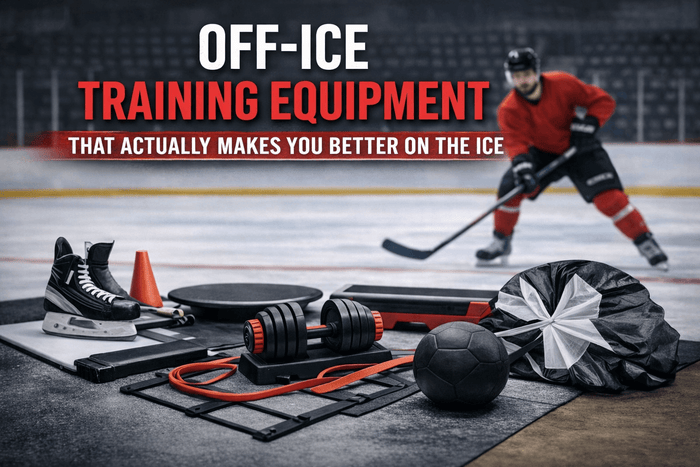
- Slide boards. Lateral power, edge transfer, and skating-specific muscle endurance. Twenty minutes on a slide board mimics a hard 5-on-5 shift better than most cardio machines. Look for a board at least 6 feet long with adjustable bumpers.
- Agility ladders. Quick-feet patterns, crossover footwork, and reactive lateral work. Cheap, packable, and useful from age 8 through pro. Add hockey-specific patterns: edge-replicating Z-cuts and lateral shuffles, not just standard speed-ladder drills.
- Resistance bands. Hip mobility, shoulder stability, and warm-up activation. A small set covers stretching, glute activation, and rotator cuff prep before any session.
- Medicine balls. Rotational power, the kind that fuels every shot. A 6-, 8-, or 10-pound ball rotates a player into the same hip pattern a slap shot uses. Two sessions per week of slams and rotational throws add measurable shot velocity by season’s end.
- Balance boards. Edge control simulation. Standing on a wobble board while stickhandling builds the proprioception that real edge work demands. Especially useful for Squirts and Peewees still developing balance.
- Inline skates. Worth a brief note: serious off-ice skating practice still belongs on inline gear or synthetic ice. A few sessions per week through the summer keep stride mechanics sharp without rink dependence.
The full ecosystem of dryland fitness gear is wider than this guide can cover. For a structured weekly plan, our hockey strength training breakdown lays out warm-ups, lifts, and conditioning by age group.
Complete Training Kits & Bundles - Save Money, Skip the Guesswork
Buying gear piece by piece adds up fast. Two products plus shipping plus a forgotten accessory equals a confusing checkout and a setup that’s missing something. Bundles solve that.
Give-N-Go Dryland Training Kits package the core off-ice tools at a discount over individual pricing. Two main options:
- Give-N-Go Combo (Best Value). The starter bundle. Stickhandling trainer, passer, and a shooter tutor. Enough to build a complete dryland session without filler.
- Give-N-Go Multiple. The deeper bundle. Adds extra rebounding tools and accessories. Built for households with two or three skaters or for teams that rotate gear between players.
Who is for each:
The Combo fits an individual player. One kid, one space, one consistent training routine. Daily reps across stickhandling, passing, and shooting in 30-45 minutes.
The Multiple bundle fits a coach or a hockey family with siblings on the same training arc. Teams use it for off-season camps and pre-tryout prep. Workout pods can run in parallel: one kid passing, another shooting, another stickhandling, then rotating.
Best value note: Bundling the Combo saves a noticeable amount versus à la carte. The Multiple bundle stretches that math even further when you factor in the team-rotation use case.
How to Choose the Right Training Aids for Your Player’s Level
Different ages need different gear. Buying a Bantam-level passer for a Mite is wasted money; buying a kid-scaled trainer for a Junior is wasted reps.
Quick-reference matrix:
| Level | Stickhandling | Passing | Shooting |
|---|---|---|---|
| Beginner (6U-8U) | Swedish ball, light trainer | 30-inch passer or rebounder | ADM-scaled shooter tutor |
| Intermediate (10U-12U) | Fast Hands Pro, Green Biscuit | 60-inch Give-N-Go Passer | Full-net shooter tutor |
| Advanced (Bantam+) | Weighted pucks, tempo work | Power Passer (anchored) | Pro-grade tutor + tarp combo |
Age-based notes:
- Mites (6U-8U). Lighter sticks, smaller targets, kid-scaled gear. Two sessions of 10 minutes beat one session of 30. Repetition matters more than length at this age.
- Squirts (10U). The first level where full-size adult gear starts to fit. A 60-inch passer becomes feasible. Add a full shooter tutor.
- Peewees and Bantams (12U-14U). Add weighted pucks, anchored passers, and structured weekly programming. Skills stack fast at this age.
- Bantam+ and adult rec. Treat off-ice as a year-round commitment. Three to four sessions per week, periodized across the season and the offseason.
Budget tiers:
- Under $100. Ball, biscuit, basic shooting pad. Enough to start. Don’t overthink it.
- $100-300. Add a passer or a basic tutor. Real progress shows here.
- $300+. Full kit, anchored passer, premium tutor. Elite-track investment.
Why “Made in the USA” Matters for Hockey Training Gear
A cheap import may save thirty bucks at checkout. It also tends to crack, splinter, or warp inside one season. Replacement costs add up fast, and a kid loses momentum every time the gear stops working.
Give-N-Go training aids are manufactured in Michigan from heavy-gauge steel and pro-grade HDPE. The result: a gear built to last a youth career, get passed down to a younger sibling, and still hold up. Steel gripper teeth on the Passer, custom hooks on the Shooter Tutor, and the full Power Passer hardware are spec’d to the same durability standard the company uses for NHL and AHL teams.
Two practical points for buyers:
- Replacement math. Buying once at a higher quality often beats replacing a cheap aid two or three times. Run the per-year cost.
- Resale and family value. Steel-and-HDPE gear from a Michigan factory holds resale value or stays useful as siblings grow into it.
Build Your Off-Ice Setup This Week
The path is clear. Pick the skill that matters most this season, build a 20-minute daily routine around it, and let the reps compound. Stickhandling, passing, shooting, and conditioning all benefit from the same equation: pro-grade gear plus consistent work equals visible progress.
Every off-ice rep is a deposit. The kid who shoots 200 pucks a week into a Shooter Tutor is the kid who pots two more goals per month next season. The hands you can’t get on the ice get built on the garage floor.
If you’re ready to set up your space, head over to Give-N-Go Hockey and grab a free Green Biscuit with every order. Whether you’re starting with a single trainer or going straight to a full kit, you’ll be working with the same gear used by every NHL and AHL team in North America.
Frequently Asked Questions About Off-Ice Hockey Training Aids
What’s the difference between off-ice and on-ice training?
On-ice training builds skating-specific skills: edges, crossovers, and real puck control on a fast surface. Off-ice training builds the supporting work, like stickhandling reps, passing partners, shot accuracy, conditioning, and rotational power. The two are complementary, not interchangeable. Players who do both develop faster than players who rely on practice alone.
How much should I budget for hockey training aids?
A starter setup runs $50-100 (ball, biscuit, basic pad). A serious player setup runs $100-300 with the addition of a quality passer or shooter tutor. An elite or full-family setup runs $300+ and includes a kit bundle, anchored passer, and premium tutor. Match the budget to the level of commitment, not the other way around.
Are off-ice training aids worth it for Mites and 8U players?
Yes, if the gear is scaled correctly. A weighted Swedish ball, a small ADM-format shooter tutor, and a 30-inch passer all work for 6U-8U. Sessions should stay short (10-15 minutes) and end before the kid loses focus. The goal at this age is touch and habit, not volume.
What’s the most important off-ice training aid to buy first?
A stickhandling ball or Green Biscuit, plus a smooth surface to use it on. Stickhandling has the highest off-ice transfer rate to game performance, costs the least to start, and requires zero coaching to do well. Once daily reps become a habit, expand to a passer and a shooter tutor.
Can I use synthetic ice tiles in a garage or basement?
Yes. Synthetic ice tiles work well in garages, basements, and finished outdoor spaces. Look for a flat, level subfloor, leave room for the player to stride, and ventilate if you’re using indoor blade sharpening. The Give-N-Go Power Passer mounts directly onto synthetic ice, so a 10x12 setup can host skating, passing, and shooting in one footprint.
How long until off-ice training shows up on the ice?
Stickhandling and shooting gains often show up inside 4-6 weeks of consistent daily reps. Passing and rotational power gains take a full season to convert fully. Conditioning shows up immediately on the next high-tempo shift. The compounding rule: little, often, beats a lot, sometimes.
Are Give-N-Go training aids really used by NHL and AHL teams?
Yes. All 32 NHL teams and all 32 AHL teams use Give-N-Go training aids in their dressing rooms and pre-game routines. The same products you can buy for a garage are the products pros use to warm up their hands before a game.
What surfaces work for the Give-N-Go Power Passer?
The Power Passer installs on concrete, plastic hockey tile, and synthetic ice. It uses Tapcon screws for a permanent anchor, so plan the placement before drilling. Once installed, it doesn’t shift on heavy passes, which is what makes it different from rebounders that move every fifth rep.