Hockey players should train off the ice 2 to 5 times per week, depending on age, skill level, and the time of year. Youth players aged 8 to 12 do well with 2 to 3 sessions weekly, teens with 3 to 4, and competitive adults with 4 to 5. Off-ice work is where you build the engine that ice time runs on.
Ice is expensive, and the clock is always ticking. Structured dryland training is what closes the gap, and it pays off. Players who follow a consistent off-ice plan see roughly 8% faster skating speed and 10% more shot power over a season. Every one of the 32 NHL teams treats off-ice work as standard practice, not an extra.
This guide breaks down exactly how often to train, sorted by age and by the phase of your season, so you stop guessing and start improving.
Key Takeaways
-
Most players land between 2 and 5 off-ice sessions per week, scaled to age and season.
-
Frequency matters more than length. Three sharp 25-minute sessions beat one sloppy 90-minute grind.
-
Off-season is the build window: 4 to 5 days a week. In-season drops to 2 to 3 for maintenance.
-
Young kids need play and movement, not structured reps. Keep it short and fun until about age 8 or 9.
-
Watch for overtraining signs like flat performance and poor sleep, and back off when you see them.
Why Frequency Beats Duration Every Time
Ask most parents how their kid should train, and they picture one long session. Flip that thinking. Your body adapts to repeated, consistent signals, not to the occasional marathon. Muscle and the nervous system both learn through frequent stimulus. Stickhandling is a neural skill, and your hands get quick by touching the puck often, not by one massive Sunday session. Short and frequent wins.
Most pros spend close to two hours off the ice for every hour on it. They are not doing that in one block. They spread it out because the body responds better to steady input across the week.
Quality always beats quantity here. A focused 20 to 30 minutes with a clear goal, like hitting corners with a shooter tutor or running clean reps on a stick handling aid, does more than 90 distracted minutes. Set the intention, do the work, and move on.
How Often by Age Group
Age changes everything about training frequency. A six-year-old and a seventeen-year-old should not follow the same plan. Here is the breakdown.
Mini-Mites and Beginners (Ages 5 to 8): 1 to 2 Sessions
At this age, the goal is movement, balance, and fun. Forget structured drills. Sessions should cap at 15 to 20 minutes before attention fades.
Think balance games, simple obstacle courses, and basic coordination with a stick and a ball. The Fast Hands Mini Mite Model is built for exactly this age, and it ships with a free Green Biscuit to get little hands moving.
One warning for parents: do not over-structure this stage. Playing other sports counts as off-ice training. A kid who climbs, runs, and plays soccer is building the athletic base hockey rewards later.
Youth Players (Ages 9 to 12): 2 to 3 Sessions
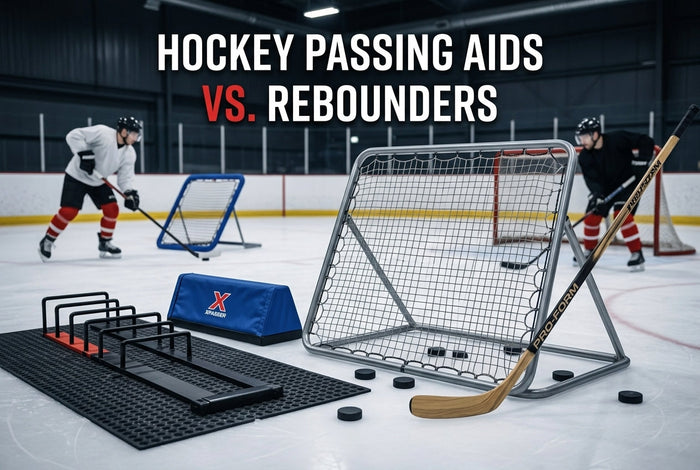
Now you start building hockey-specific foundations. Sessions run 20 to 30 minutes. Focus on basic stickhandling, passing accuracy, simple bodyweight movements, and light agility. A passing aid at home gives kids reps they would never get in a team practice. The 30-inch off-ice model fits a garage or basement and gives a true, flat rebound.
These sessions supplement multi-sport play; they do not replace it. Keep the variety. Burnout at twelve is real, and the kids who quit early often trained too narrowly too soon.
Bantam and Midget (Ages 13 to 16): 3 to 4 Sessions
This is where great skill and strength development begins. Sessions stretch to 30 to 45 minutes. Add structured strength work, from bodyweight into light weights, plus dedicated shooting and stickhandling.
A home setup pays off here. Dryland kits and a shooter tutor let a player rack up reps between practices. Speed and agility work belong in the mix too.
Mind the growth spurt. During fast growth, coordination dips and overuse injuries climb. Keep loads sensible and prioritize movement quality over chasing numbers.
Junior, College, and Adult Competitive (Ages 17+): 4 to 5 Sessions
Peak training volume lives here. Sessions run 45 to 60 minutes and follow a real plan, with periodized strength, advanced skill work, and sport-specific power.
Pro-level tools fit this level: a 60-inch passing aid, the Professional Grade Shooter Tutor with eleven numbered targets, and a full dryland kit. NHL players often train twice daily, four days a week, through the off-season. You do not need that volume, but you do need consistency.
Beer League and Recreational Adults: 2 to 3 Sessions
Real life has jobs and kids in it. Two to three short sessions, 20 to 30 minutes each, keep you sharp and, just as important, keep you healthy.
The aim shifts toward injury prevention, mobility, and holding onto your skills. Compact gear like a 30-inch passer or a small shooting board turns a garage into a rink-adjacent training spot. Consistency, not intensity, is the win here.
How Training Frequency Shifts Across the Season
Smart players do not train the same way in July as they do in January. Periodization, matching your volume to the calendar, separates real development from random workouts.
Off-Season (May to August): Build Phase, 4 to 5 Days
This is when the biggest gains happen. Volume is at its highest. Split it into 2 to 3 strength and conditioning days plus 2 to 3 skill days for stickhandling, shooting, and passing.
This is also the time to invest in quality home equipment, because you will use it constantly. A sample week might look like strength Monday, skills Tuesday, conditioning Wednesday, skills Thursday, and a long skill or strength session Saturday.
Pre-Season (August to September): Prepare Phase, 3 to 4 Days
Now you shift from building to sharpening. Intensity climbs, volume eases slightly. Add game-speed drills, quicker decisions, and faster shot release. You want to arrive at tryouts already in rhythm, not playing catch-up.
In-Season (October to March): Maintenance Phase, 2 to 3 Days
Once games start, you train around them. The goal becomes maintenance, recovery, and patching specific skill gaps. Keep sessions short, 20 to 30 minutes. Never lift heavy the day before or after a game. A quick home session of passing or hands work between games keeps the touch alive without draining the legs.
Post-Season (April to May): Rest Phase, 0 to 2 Days
Take the break. Active recovery only: light movement, stretching, other sports. Three to four weeks fully away from structured hockey training is not lazy; it is smart. That gap prevents burnout and actually improves long-term development. The kids who never stop are the ones who flame out.
Ready-to-Use Weekly Schedules
Plans beat intentions. Here are three sample weeks you can copy today.
Youth Player (Age 10, In-Season)
-
Monday: Rest.
-
Tuesday: 20 minutes stickhandling with Fast Hands, then 10 minutes agility.
-
Wednesday: Game day.
-
Thursday: 25 minutes shooting at a tutor, tracking hits.
-
Friday: Team practice.
-
Saturday: Game day.
-
Sunday: 15 minutes passing reps off the 30-inch passer.
This fits real life. Two short home sessions slot neatly around games and practice without piling on.
Teen Player (Age 15, Off-Season)
-
Monday: Strength, 40 minutes (squats, lunges, push-ups, core).
-
Tuesday: Skills, 35 minutes (stickhandling course plus shooting).
-
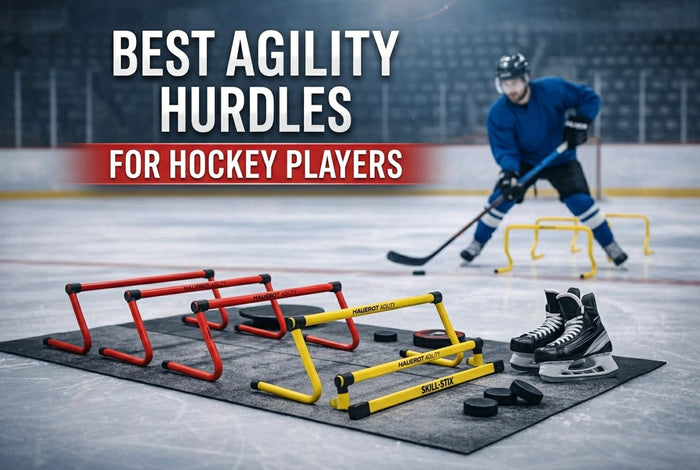
Wednesday: Conditioning, 30 minutes of sprints and agility hurdles.
-
Thursday: Skills, 35 minutes (passing and quick-release work).
-
Friday: Rest or light mobility.
-
Saturday: Full session combining strength and skill.
-
Sunday: Off.
Adult Competitive (In-Season)
- Two 25-minute home skill sessions on non-game days.
- One short strength or mobility session.
- Everything built around work, family, and game nights. Efficient beats ambitious when your week is full.
How to Tell If You Are Training Too Much or Too Little
Both extremes hurt. Reading the signs keeps you in the sweet spot.
Overtraining shows up as persistent fatigue, performance that slides instead of climbs, nagging or repeat injuries, lost motivation, and poor sleep. If two or three of these stack up, cut volume by a third and add a rest day. The fix is almost always recovery, not more work.
Undertraining looks different: no improvement season over season, conditioning that lags behind teammates, and feeling gassed or unprepared in games. If that sounds familiar, add one focused session a week and hold it for a month before judging.
Parents tend to worry about both at once. The honest answer is that consistency at a sensible frequency, with real rest built in, protects against both. Trust the plan over the panic.
Building a Home Setup That Makes Frequent Training Easy
The single biggest barrier to training often is access. If gear is set up and ready, you train. If it means driving somewhere, you skip. Solve that at home.
A complete off-ice setup covers five jobs:
- A passing aid for one-touch passing and reception.
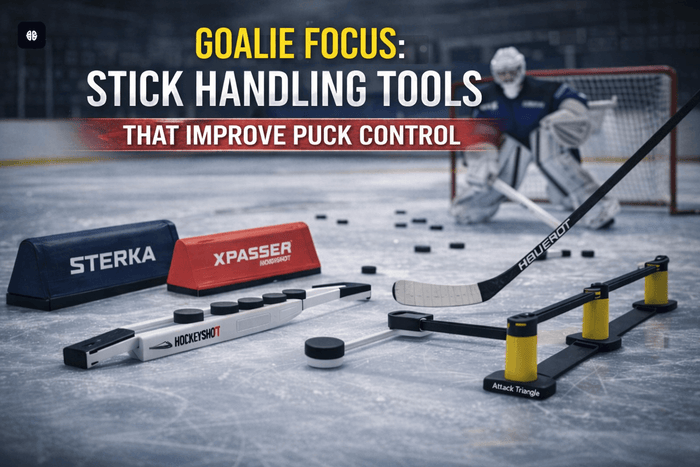
- A stickhandling trainer for soft, quick hands.
- A shooter tutor for accuracy and target tracking.
- A shooting board for a realistic puck release.
- Agility hurdles for footwork and lower-body power.
If you would rather not piece it together, the Dryland Intermediate Kit bundles the essentials into one solution. Everything is professional grade, made in the USA, backed by a lifetime guarantee, and ships with no assembly required. You can also browse the full range of hockey training aids and free training drills to match the gear to your plan.
Frequently Asked Questions
Is off-ice training better than extra ice time?
Neither replaces the other. Ice time sharpens game feel, while off-ice work builds the strength, speed, and hands that power it. The best players do both, and off-ice is where most of the underlying engine gets built.
Can you do off-ice training every day?
You can do light skill work most days, but you should not do hard strength or conditioning daily. Rest is when the body adapts and gets stronger. Build at least one or two full rest days into every week.
What age should hockey players start off-ice training?
Structured training fits around age 8 or 9. Before that, free play and multiple sports are the best off-ice training there is. Early specialization usually backfires.
How long should an off-ice session be?
Anywhere from 15 minutes for young kids to 45 or 60 minutes for competitive teens and adults. Match the length to age and focus, and stop before quality drops.
Does off-ice training really improve skating?
Yes. Structured dryland work targeting leg power, balance, and explosiveness translates directly to faster, stronger skating, with measured gains around 8% in skating speed over a season.
Should I train off-ice the day before a game?
Light skill work only. Some easy stickhandling or a few passes keeps your touch sharp. Skip heavy strength or conditioning so your legs are fresh.
How do NHL players train off the ice?
In the off-season, many train twice a day, roughly four days a week, blending strength, conditioning, and high-rep skill work. The principle you can copy is consistency, not their exact volume.
Is more training always better?
No. Past a point, more volume brings fatigue and injury, not progress. The right frequency with real recovery beats grinding every single day.
Start Training Smarter Today
The takeaway is simple: consistency at the right frequency matters more than the occasional marathon session. Pick a number that fits your age and your season, set up your gear so it is ready, and show up. Explore our complete line of professional-grade training equipment, the same gear used by all 32 NHL teams, and build a routine you will actually keep.
Questions about where to start? Call us at 248-831-1692 or contact us, and we will point you to the right setup. Get your free Green Biscuit with every hockey equipment order, with no code needed. Shop all training aids and start building your engine off the ice.