NHL teams use pro-grade training aids because cheap gear breaks fast under pro-level shots. Give-N-Go Hockey builds passing aids and shooter tutors with heavy-gauge steel frames, solid rubber bumpers, and one-piece HDPE targets, manufactured in Michigan. All 32 NHL teams, 32 AHL teams, and USA Hockey NTDP train with the same equipment available to your team, backed by a lifetime guarantee.
Key Takeaways
- All 32 NHL teams, 32 AHL teams, and USA Hockey NTDP train with Give-N-Go training aids, the same gear available to clubs and families.
- Pro-grade means 11-gauge steel frames, solid rubber bumpers, and one-piece HDPE targets built to survive daily use at 90+ mph shot speeds.
- NHL practices run station-based drills, with passers replacing the need for extra players to feed pucks during 45 to 60 minute ice sessions.
- Shooter tutors with 11 numbered targets train accuracy at the corners, and low spots goalies cannot cover, and they save your goaltender from extra reps.
- Every product is made in Michigan with a lifetime guarantee, so the cost is amortized across years instead of seasons.
What Counts as Pro-Grade Hockey Equipment?
Walk into any NHL practice facility, and you'll spot the same handful of training aids on the ice. Not the flashiest. Not the cheapest. The ones that survive.
Pro-grade gear is built for one job: to handle daily abuse from the strongest shooters in the world, 365 days a year, without breaking down. NHL equipment managers do not have time to baby a piece of plastic that warps after a hundred slap shots. They need passers and shooter tutors that show up at 7 a.m., absorb a thousand reps, and look the same at the end of the season.
That standard pulls every spec into focus. Frames are built from 11-gauge steel with .120-inch wall thickness, locked together with industrial fasteners that do not rattle loose. Shooter tutor targets are 5/8-inch high-density polyethylene, one solid piece, no laminated layers to crack. Bumpers on a pro-grade passer are solid rubber, not stretched bands or thin plastic that snap after a few weeks.
Compare that to consumer-level gear at the big-box rink: thinner steel, plastic bumpers, exposed assembly bolts. It looks similar in a photo. It performs nothing alike when a 90 mph one-timer hits it.
Here's the deal: pro-grade is not about marketing language. It's about the gear surviving the worst day a piece of training equipment can have, then doing it again tomorrow.
How Do NHL Practices Use Passing Aids?
NHL ice time is precious. Most teams get 45 to 60 minutes of full-team practice between flights, video sessions, and recovery work. Every second on the sheet has to count.
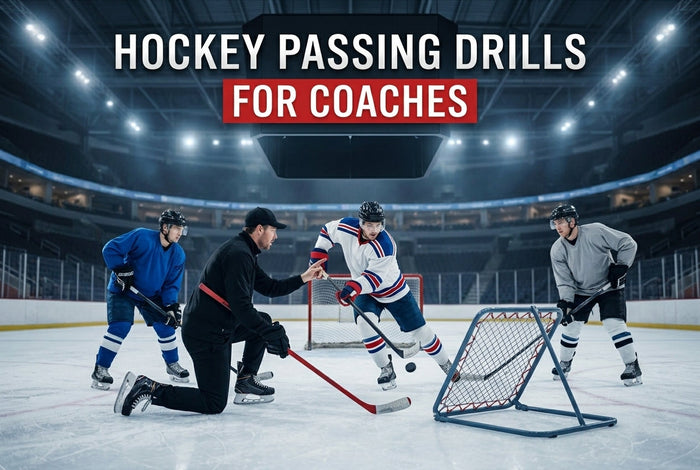
That's why pro coaching staffs lean heavily on passing aids. Set up four Give-N-Go passers along the boards and you've created four shooting stations with no extra players needed to feed pucks. Players cycle through, take their reps, and rotate. The drill never stops because someone shanked a pass or skated to grab a stray puck.
Common drills you'll see at the pro level:
- One-timer setups off the passer for shooting accuracy
- Rapid-fire passing sequences for hand-eye and quick release
- Breakout simulations where a defenseman bumps the puck off the passer to break the play out
- Tip drills with the puck rebounding to a forward in the slot
Two design pieces make this work at NHL speed.
First, the solid rubber bumpers. The 60-inch on-ice model uses a patent-pending solid rubber bumper system, not the elastic band setup you'll find on cheaper rebounders. The puck comes off fast and flat, mimicking a real pass instead of bouncing high or sideways like it hit a trampoline. Skills specialist Pavel Barber and Coach Jeremy Rupke at How To Hockey have both pointed to that flat, predictable rebound as what makes the rep usable on a pro sheet.
Second, the steel gripper teeth on the base. They lock the passer in place on the ice during hard cycles, even when a defenseman absolutely buries a pass into it. Nothing slides. Nothing tips. The next rep starts on schedule.
That reliability is the entire reason pros use them. A drill that breaks down halfway through is wasted ice.
Why Pros Drill With Shooter Tutors
Goaltenders take a beating. Between team practice, individual sessions, and games, an NHL goalie can face a thousand pucks in a week. Skills development for shooters cannot all happen at the goalie's expense.
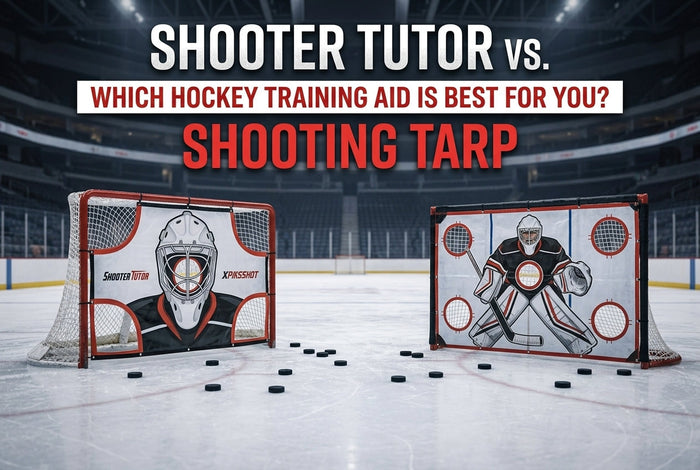
That's where the shooter tutor comes in. A pro-grade shooter tutor gives shooters a target. The Give-N-Go Pro tutor has 11 numbered openings: 6 high-scoring spots in the corners and along the bar, and 5 average-scoring spots low on the ice. The numbering is not arbitrary. Those are the locations where goals actually go in.
A young player who learns to aim for "the 1" in the upper corner and "the 5" five-hole is not doing trick shots. They are learning the same target zones an NHL development staff drills into a draft pick.
The construction matters too. Pro shooter tutors are one-piece HDPE: no seams, no glued layers, no metal frame around the holes that can dent and warp. A pro shot at 90+ mph hits and the puck deflects cleanly. The tutor does not crack. It does not sag in the middle after a season. It looks the same after 10,000 shots as it did the day it shipped.
You also get one underrated benefit: rested goalies. Shooting drills with a tutor mean your starter saves their pads while shooters work on accuracy. Coaches at every level appreciate that math.
From a Michigan Workshop to Every NHL Rink
Give-N-Go Hockey did not show up at the NHL level through marketing dollars. The story is simpler.
Founder Jim Marinoff started building passing aids in 2012 with one goal: to make a hockey rebounder durable enough to last a lifetime, manufactured in the United States. He cut the steel heavier than competitors. He swapped rubber bands for solid rubber bumpers, a design that became patent-pending. Then he took it to the rinks where players actually trained.
Equipment managers noticed first. Word travels fast in pro hockey. A passing aid that does not fall apart, does not need replacement parts, and does not move during drills is the kind of thing that gets shared between teams. Within a few seasons, the same Michigan-built gear was sitting on the bench of every NHL team. Today, all 32 NHL clubs, 32 AHL clubs, USA Hockey NTDP, and hundreds of college programs train with it.
The philosophy hasn't shifted. Read our story, and you'll see the same line repeated: built to be passed down through generations. Trust me, that's not marketing fluff for a piece of equipment under $500. It's what happens when a 60-inch passer that started in a kid's garage at age 8 still works when his own son is using it.
That kind of build does not come from offshore mass production. Every Give-N-Go product is manufactured and assembled in Michigan with a lifetime guarantee. No assembly required. No replacement parts to order. The product shows up ready to use.
How Can Your Team Train Like the Pros?
Here's something most coaches don't realize: the gap between an NHL practice setup and a U12 club practice setup is smaller than you think. The Detroit Red Wings, your local junior team, and your kid's youth league all have access to the exact same Give-N-Go models. Same steel. Same bumpers. Same target system.
The difference is how you set it up.
A simple station-based practice using two passers and a shooter tutor can transform a 60-minute youth practice. Get four to six kids working on edges and passing at one station while the rest of the team rotates through shooting and goaltender drills at another. No idle players. No standing in lines. Real reps. For drill ideas built around the equipment, see our training drills library.
Starter setup for a youth team:
- 2 Give-N-Go 60-inch on-ice passers
- 1 Pro-Grade Shooter Tutor
Full program setup:
- 4 passers (mix of 60-inch and 30-inch)
- 2 Pro-Grade Shooter Tutors
- Power Passers for the dryland and locker room area
Dryland training at home:
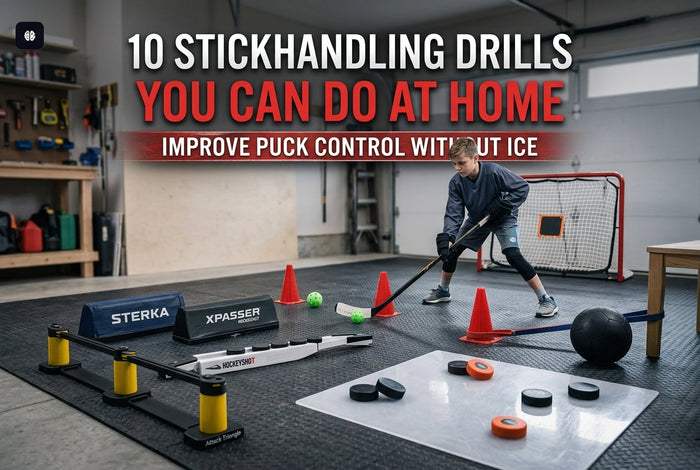
- A dryland training kit for garage and basement work
The cost question always comes up. Yes, pro-grade is more expensive upfront than the rebounder you'll find at the big-box store. But amortize the cost across 5 to 10 seasons of use, factor in the lifetime guarantee, and the math flips. Cheaper alternatives often need to be replaced every season or two. A pro-grade passer is still working when the kid who first used it is in college.
Every order ships with a free Green Biscuit, the off-ice puck NHL skills coaches use for stickhandling drills. Small touch, real value.
Choosing Training Aids by Age Group
Different ages need different gear. Here's a quick fit-check for what works at each level.
6U and 8U (Mini-Mites and Mites):
The ADM Shooter Tutor (sized for mini-nets) is built for the half-ice format that USA Hockey runs at this level. Smaller targets, lighter setup, age-appropriate. Add a Fast Hands Mini Mite stick handling aid for off-ice puck control work.
10U to 14U (Squirts to Bantams):
This is where station-based ice practice really pays off. Use 30-inch passers (more accessible for shorter sticks and reaches) plus the Pro-Grade Shooter Tutor for accuracy work. A coach with two passers and one tutor can run a real pro-style station drill with this age.
High school, juniors, and college:
Full-size 60-inch passers and the Pro-Grade Shooter Tutor. Same gear used at the pro level. No reason to step down to lower-grade equipment for a player chasing a spot at the next level.
Adult and beer league:
A dryland kit for the garage. You won't get NHL ice time on a Tuesday night, but 20 minutes of focused stickhandling and shooting at home keeps the hands sharp for Saturday's game.
Skills coaches and training facilities:
Power Passers are installed in permanent training spaces, agility hurdles for footwork, and shooter tutors for accuracy stations. Browse the full fitness equipment line for off-ice work.
Ready to Train Like the Pros?
The same equipment that's on the ice in NHL practice arenas is available for your rink, your garage, or your skills facility. Same Michigan-built steel. Same patent-pending bumpers. Same lifetime guarantee. The only thing that changes is the player using it.
Shop the full Give-N-Go training aid collection to see the gear pros rely on. For team and program pricing, contact us directly or call 248-831-1692.
Built in Michigan. Built to last a lifetime. Used by every NHL team.
Frequently Asked Questions About Pro-Grade Hockey Training Aids
Are NHL teams really using the same equipment available to amateur players?
Yes. The Give-N-Go models on every NHL bench are the same models sold to youth clubs, high school programs, college teams, and individual players. There is no separate "pro line." The 60-inch passer at a Tampa Bay practice is the same one a 12-year-old in Minnesota uses in their driveway.
What makes a hockey training aid pro-grade?
Pro-grade means heavy-gauge steel frames (11-gauge with .120-inch wall thickness), solid rubber bumpers instead of elastic bands, one-piece HDPE shooter targets instead of laminated layers, and zero assembly required. It's built to absorb daily use under 90+ mph shots without warping, cracking, or coming apart.
How long does pro-grade hockey equipment actually last?
With normal use, our products are designed to last decades. Every Give-N-Go and Fast Hands Hockey product carries a lifetime guarantee, manufactured in Michigan. Many coaches and skills trainers report using the same passers for 8 to 10 years across hundreds of practices.
Can rebounders and passing aids be used off the ice?
Yes. The 30-inch off-ice model is built for garages, basements, driveways, and dryland training rooms. Use a street hockey ball or a Green Biscuit instead of a real puck. Younger players can train technique year-round without booking ice time.
Are these training aids safe for youth hockey players?
Yes, with normal supervision and spacing. Younger players (6U and 8U) should start with the smaller ADM-sized shooter tutors and lower-velocity passes. As skills develop, they can move up to full-size equipment. The build is sturdy enough that nothing rattles loose or breaks during a practice.
What drills work best with a Give-N-Go passer?
One-touch passing, quick-release shooting off the rebound, give-and-go simulation, breakout pattern reps, and goalie deflection setups. Each unit ships with a 25-drill book and video so coaches and parents can run pro-style stations from day one. See our full training drills page for more options.
How often should players train with shooter tutors and passing aids?
Four to five sessions a week, 20 to 30 minutes each, will produce real progress. Quality reps beat quantity. A focused 25-minute station session with a passer and tutor will sharpen hands and shots for more than an hour of unstructured shooting.
Where are Give-N-Go training aids manufactured?
Every product is manufactured and assembled in Michigan, USA. Heavy-gauge American steel, solid rubber bumpers, and HDPE targets are built and shipped from our facility. No offshore manufacturing.