You are at the rink three times a week. You shoot pucks in the driveway. You put in the work, and yet the leap you keep waiting for never quite arrives. Sound familiar? You are not alone, and you are not lazy. Most plateaus are not an effort problem. They are a mistake problem, and the good part is that mistakes are fixable.
This guide walks through the most common hockey training mistakes across on-ice skills, off-ice work, recovery, and equipment, and gives you a fix for each that you can use this week. None of this requires more hours. It requires better ones. Let us find the leaks in your training and plug them.
Key Takeaways
Most plateaus come from training the wrong way, not from a lack of effort.
Quality reps beat volume. Head up, one cue at a time, on a surface that mimics ice.
Passing is the most undertrained skill in hockey. Fix that, and you stand out fast.
Cardio is not strength. Build power first, then condition with purpose.
Recovery is part of the program. Gains happen on rest days, not just work days.
On-Ice and Skill Training Mistakes
These are the skill mistakes that show up on the ice, the ones that cost you in games even when practice feels fine.
Stickhandling With Your Head Down
When your eyes are glued to the puck, you cannot see the ice. You get caught flat-footed, you miss open teammates, and you take more hits because you never saw the check coming.
The Fix: practice head up. Feel the puck on the forehand, backhand, toe, and heel of your blade until you no longer need to look. Use your peripheral vision to track the puck while your eyes stay up. Start slow, then add speed. USA Hockey and Hockey Canada both teach head-up handling from the very first stages for exactly this reason.
Treating Stickhandling as Just Side to Side
Real stickhandling moves the puck front-to-back and around your body, not only side to side. Defenders read a predictable side-to-side rhythm in a heartbeat and time their poke-check to it.
The Fix: add toe drags, pulls, and around-the-body reps so the puck moves in every direction. The more unpredictable your handling, the harder you are to defend.
Bad Hand Position and Grip Mistakes
This is the detail most players never get coached, so let us be specific. Three grip errors quietly wreck your puck control.
First, the top-hand hip lock. When your top hand glues itself to your hip, you kill your range of motion. Keep a gap between your top hand and your body. Second, the thumb-on-top grip. Your thumb belongs on the side of the shaft, not the top, so your wrist can move through its full range. Third, a death grip with the bottom hand. The top hand does the controlling. Grip firmly with the bottom hand only when you shoot, pass, or receive.
The Fix: drill correct hand position slowly until it feels natural, then bring it up to game speed.
Overhandling the Puck
Rapid, pointless stickhandling, sometimes called dusting, looks busy but it slows your release and telegraphs your intent. Every extra move is a tell.
The Fix: keep the puck quiet on your blade and stay ready to shoot or pass in an instant. Less is more. A still puck is a dangerous puck.
Practicing Power Over Accuracy When Shooting
Blasting pucks into the boards feels great. It also does not score. Goals come from accuracy and a quick release, not from raw velocity that sails wide.
The Fix: pick a target before every single shot- the top corner, the five-hole, a specific spot. Prioritize a quick wrist-shot release over a big windup. Train your shooting accuracy against defined target zones instead of just firing at the net, and your goal totals will follow.
Skating Too Upright
A tall stance steals your stride power and your agility. Standing straight up means you cannot push hard or change direction quickly.
The Fix: stay in a deep knee bend. Lower your center of gravity for explosive strides and faster cuts. It is uncomfortable at first, then it becomes free speed.
Never Training Passing
Here is the big one. Passing is the single most undertrained skill in the game. Players fire hundreds of pucks and pass almost none, yet passing and receiving is what actually moves the puck in a real game.
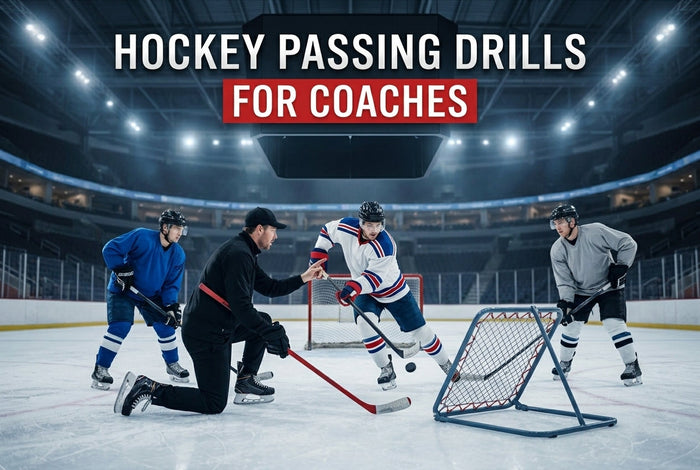
The Fix: rep passing and receiving on both your forehand and backhand off a fixed passing target that returns the puck the same way every time. Crisp passing is rare, so building it is one of the fastest ways to separate yourself.
Off-Ice Training Mistakes
On-ice reps alone will not build the engine. Here is where off-ice work tends to go wrong.
Skipping Off-Ice Work Entirely
Ice time is expensive and limited, so players who only train on the ice cap their strength, their speed, and the sheer number of skill reps they can get.
The Fix: build a simple off-ice routine of strength, agility, and skill reps to support your on-ice development, not replace it. Even 20 focused minutes a few times a week changes the trajectory.
Conditioning Yourself to Death
Watch out for the fatigue-seeker trap. Players equate burning lungs and sore legs with progress, so they grind endless gassers to fix dead legs, when the real problem is a lack of strength and power. Soreness is not the same as productivity.
The Fix: build strength and power first, then condition with purpose instead of as punishment. Dead legs late in a shift are usually a strength issue wearing a cardio costume.
Ignoring Speed, Agility, and Edge Power
Hockey is lateral and explosive. Straight-line jogging does almost nothing for your crossovers, your quick stops, or your hip power.
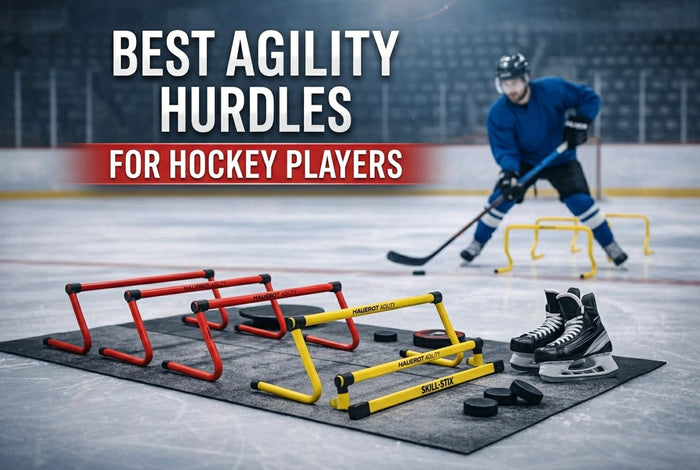
The Fix: train agility and lateral power off the ice with ladders, hurdles, and edge work. If you are not sure which gear to start with, this guide on choosing agility hurdles is a solid place to begin.
Random Instagram Workouts With No Plan
Chasing unstable, look-impressive movements blends skill and strength work badly and breaks basic training principles. You end up doing both poorly and progressing at neither.
The Fix: follow a structured plan built on fundamentals. Novelty is not a program. Pick a plan, run it long enough to measure, then adjust.
No Off-Ice Skill Reps
Most players treat off-ice time as gym-only and leave easy skill gains on the table. The gym builds the engine, but it does not build hands.
The Fix: set up a smooth surface at home and rep stickhandling, passing, and shooting to multiply your touches between practices. A simple garage training space and a basic kit from the dryland kits collection turn dead time into development.
Recovery and Programming Mistakes
The work only counts if your body can absorb it. These mistakes undo the training you already did.
Overtraining and Skipping Rest
Nonstop training with no rest tanks performance and raises injury risk. Your gains happen during recovery, not during the grind itself.
The Fix: schedule rest days and active recovery, and treat sleep as part of the program. A planned day off is not weakness. It is when you actually get stronger.
Trying to Maintain Summer Volume In-Season
Carrying full off-season volume into a packed game schedule leads to burnout and a late-season fade right when it matters most.
The Fix: shift to a maintenance load once games begin, enough to hold your strength and speed without draining the tank. In-season, your games are part of the training load. Account for them.
Only Practicing Your Strengths
Ripping your best wrist shot all practice feels good. It also leaves your backhand, your weak hand, and your off-side as holes that opponents will find and exploit.
The Fix: deliberately train your weaknesses. Build in weak-hand reps, backhand shots, and off-side work. The skills you avoid are usually the ones holding you back.
Equipment and Setup Mistakes
The right setup makes good habits easy and bad habits hard. The wrong one does the opposite.
Practicing on the Wrong Surface
A rough driveway chews up pucks and gives bad feedback, so you groove reps that do not match real ice. You get good at something that does not transfer.
The Fix: use a smooth shooting and stickhandling surface so the puck behaves the way it does on the ice.
Using Flimsy Gear That Moves or Breaks
A passing target or rebounder that slides around or breaks down gives you an inconsistent rebound. Inconsistent rebounds build inconsistent habits.
The Fix: train with stable, durable equipment that returns the puck the same way every time. Pro-grade aids are built heavy on purpose, so the rebound is identical rep after rep, which is exactly why the brand's training aids are used by all 32 NHL teams. Stable gear like a quality stick handling aid pays for itself in better reps.
No Dedicated Training Space
Without a set spot, home practice never becomes a habit. If you have to set up and tear down every time, you will quit.
The Fix: carve out a small permanent space. A corner of the garage is plenty. Remember the cost logic too: ice time runs hundreds of dollars an hour, so a modest home setup pays for itself fast.
A Simple Framework to Train the Right Way
Pull all of this together, and it gets simple. Every complete training week should touch four buckets: skill reps, which means stickhandling, passing, and shooting; strength and power; speed and agility; and recovery.
Most players over-index on one bucket, usually shooting or cardio, and ignore the rest. That imbalance is the mistake hiding behind most of the others.
So run a quick self-audit. Look back at last week and check which buckets you actually hit. Be honest. Then use this quality-rep checklist every session:
-
Head up, eyes off the puck.
-
One coaching cue at a time, not five.
-
Smooth surface and a consistent target.
-
Train your weak hand on purpose.
-
Rest built into the week.
Train Smarter, Not Just Harder
Look back at every mistake here, and you will notice they trace to one root: chasing volume over quality. The Fix for all of them is in your control, starting today. Pick the leaks that apply to you, plug them one at a time, and let your existing effort finally pay off.
Want somewhere to start? Browse our free training drills or explore the full lineup of training aids built to give you the same consistent reps the pros get. Questions? Call 248-831-1692, and we will help you train the right way. Every hockey equipment order ships with a free Green Biscuit, no code needed.
Frequently Asked Questions
Why am I not improving even though I practice a lot?
Usually because volume is high, but quality is low. Practicing mistakes only makes them permanent. Focus on head-up reps, one cue at a time, on a proper surface, and balance skill, strength, speed, and recovery instead of repeating the same comfortable drills.
Is stickhandling with your head down a bad habit?
Yes. Head-down handling means you cannot read the ice, you miss plays, and you take avoidable hits. Train head up by feeling the puck on all parts of the blade and using peripheral vision. Start slow, then build speed.
Should hockey players do more cardio or strength training?
Strength first for most players. Hockey is explosive and lateral, so power matters more than endurance jogging. Build strength and speed, then add purposeful conditioning. Dead legs late in shifts are often a strength gap, not a cardio gap.
How much off-ice training do youth hockey players need?
Two to three short sessions a week is plenty for most youth players, around 20 to 30 minutes each. Keep it fun and skill-focused, support it with multi-sport play, and prioritize movement quality over volume at young ages.
What is the best way to practice shooting at home?
Shoot on a smooth surface, pick a specific target before every shot, and focus on a quick release over raw power. Track your hits so you can see progress. Fifty focused, accurate reps beat hundreds of careless ones.
Can you overtrain in hockey?
Yes. Constant training without rest lowers performance and raises injury risk, since adaptation happens during recovery. Watch for persistent fatigue, declining results, and poor sleep. Build in rest days and shift to a maintenance load during the season.